
NATIVE TITLE VICTORY
What is Native Title?
Native title recognises that Aboriginal and Torres Strait Islander peoples have longstanding rights and interests in land and waters under their traditional laws and customs, and that those rights are recognised by Australian law. Where governments have impaired or extinguished those rights, the law provides for compensation on just terms.
The High Court recently reaffirmed that native title is a proprietary right, and that the Commonwealth can be liable for compensation when it acquires or affects that property.

The Decision
On 12 March 2025, the High Court handed down Commonwealth v Yunupingu. In doing so the Court confirmed the Commonwealth’s liability could extend to compensation for the historic impact of mining and other acts on native title in North-East Arnhem Land.
The decision has been described as one of the most significant native title rulings since Mabo, with national media coverage highlighting the implications for long-running claims linked to bauxite mining on the Gove Peninsula.
“This victory is not only for Rirratjingu, but for all Aboriginal and Torres Strait Islander peoples across Australia.” – Bakamumu Marika AM
Why it matters to Rirratjingu
Rirratjingu, alongside fellow Yolŋu traditional owner groups, has been central to this journey. The ruling strengthens the legal foundation for compensation flowing from past Commonwealth actions that impaired Yolŋu native title in East Arnhem, including grants tied to mining and special-purpose leases.
Our stance has been consistent: seek clarity, pursue just outcomes, and ensure benefits flow back to families and country.
The words of our Patron and former Chair, Bakamumu Marika AM, reflected on the landmark decision:
“Dhuka yarranytjun bukmakku Yolŋu ma ngarru nyena mawayanga burrmidinga romnga — creating a pathway for all Yolŋu to live in peace, harmony, and justice.
Today is an important step in fulfilling the work of being in control of our land — work begun by our fathers and grandfathers. It is a bittersweet moment, as we have lost all our old people who dreamed of determining what happens on our ancestral land.
In pursuit of our native title rights, we stood in the High Court as equals, alongside our Yolŋu brothers, ensuring our Rirratjingu and Gumatj voices were heard. This battle has always been about more than compensation, it is about justice, about recognising the true cost of dispossession, and about strengthening our future through land rights, economic independence, and cultural sovereignty.”
A Legacy of Land Rights Leadership
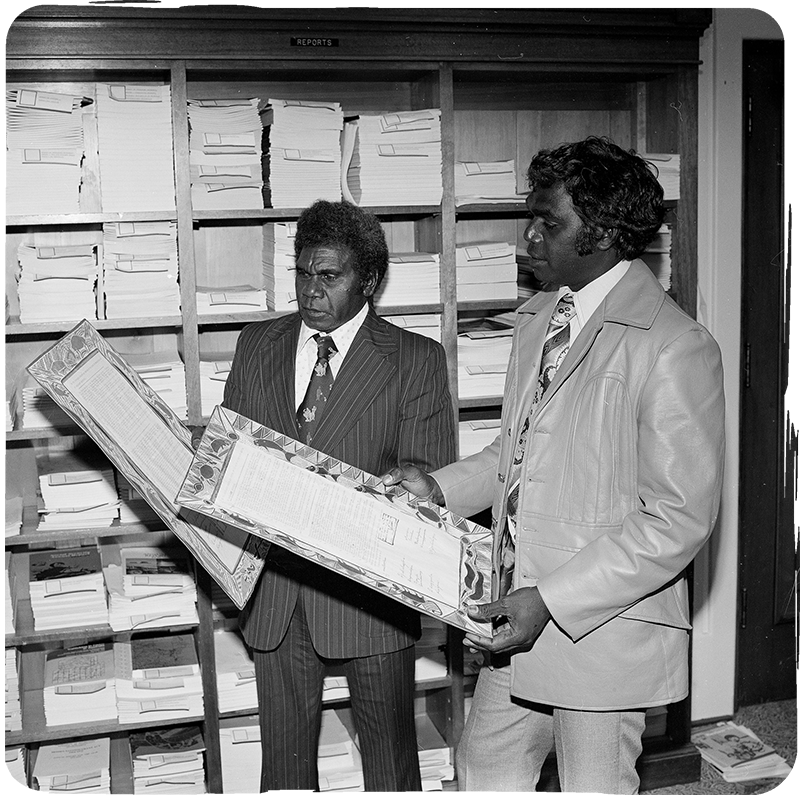
For Rirratjingu, the path to this moment stretches back six decades. In 1963, Yolŋu leaders from Yirrkala sent the Bark Petitions to the Australian Parliament. These petitions, painted on stringybark and framed with typed text, were the first traditional documents formally recognised by the Parliament, asserting Yolŋu law and relationship to country. They were a turning point in Australia’s recognition journey, even though immediate legal change did not follow.
That same movement carried into the 1971 Gove Land Rights Case (Milirrpum v Nabalco), an early legal fight led by Yolŋu leaders that, while unsuccessful at the time, helped lay groundwork for later reforms and cases.
The recent High Court ruling is widely understood as the culmination of that long game, championed by Rirratjingu and other leaders across the clans of East Arnhem.
What happens next?

For Rirratjingu, our focus is practical and forward-looking:
- pursuing fair compensation for the historic impairment of native title in our homelands,
- ensuring proceeds are managed transparently for long-term community benefit, and
- strengthening partnerships that create jobs, homes, and services while protecting culture and country.
This is not just a legal milestone, it is a mandate. The Court has confirmed what Yolŋu have said for generations: our relationship to land is real, recognised, and deserving of just treatment under Australian law.
Rirratjingu will continue to lead respectfully and firmly, working with neighbouring clans, governments, and industry to turn recognition into tangible outcomes for our people and the region we all share.

Connect with Us
If you’re interested in learning more about Rirratjingu Aboriginal Corporation and our history, we’d love to hear from you.
